A field playbook from GainForest
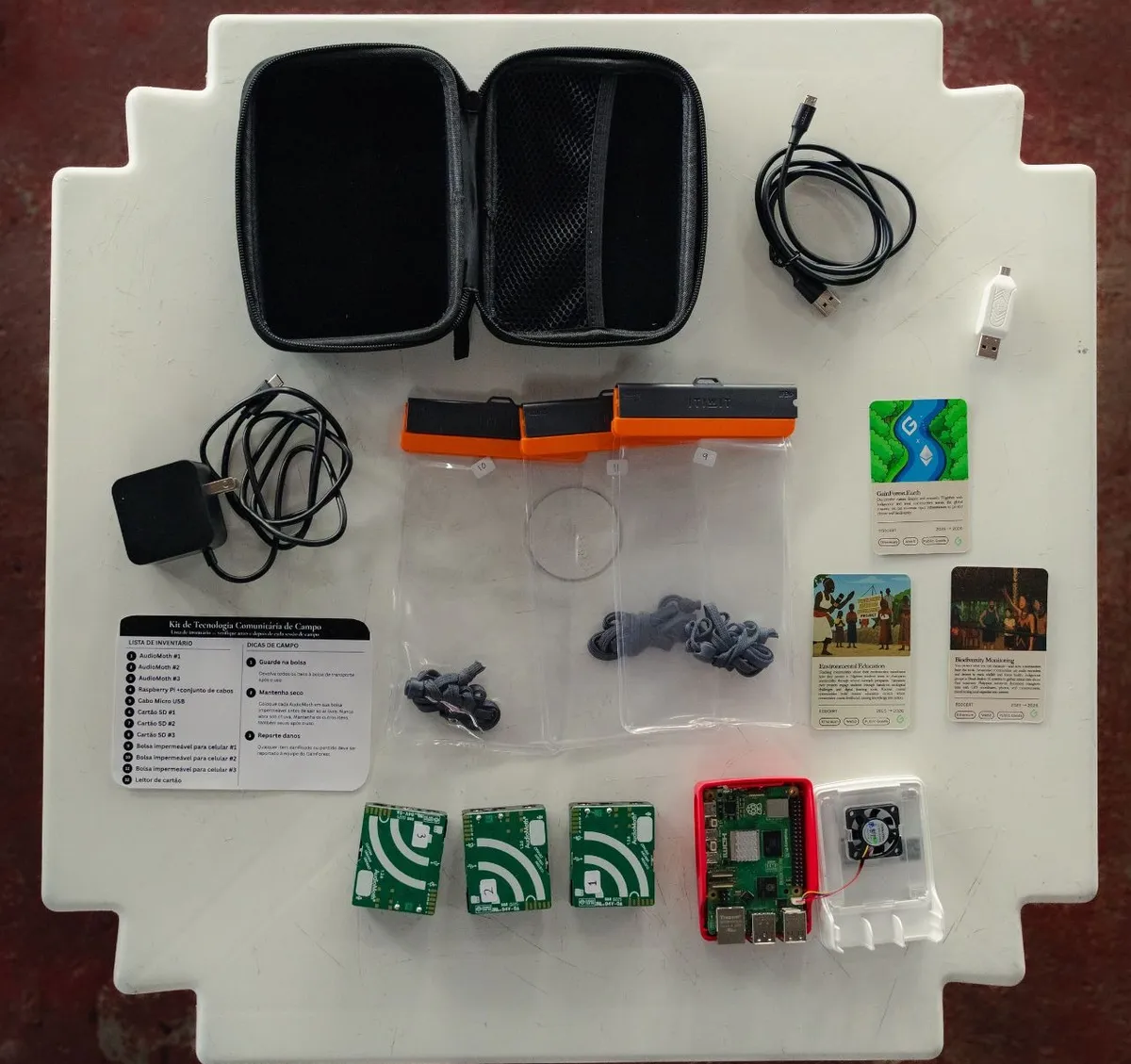
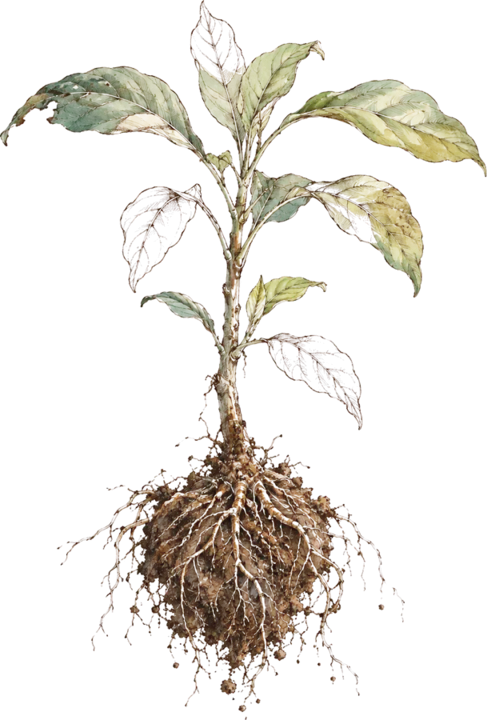
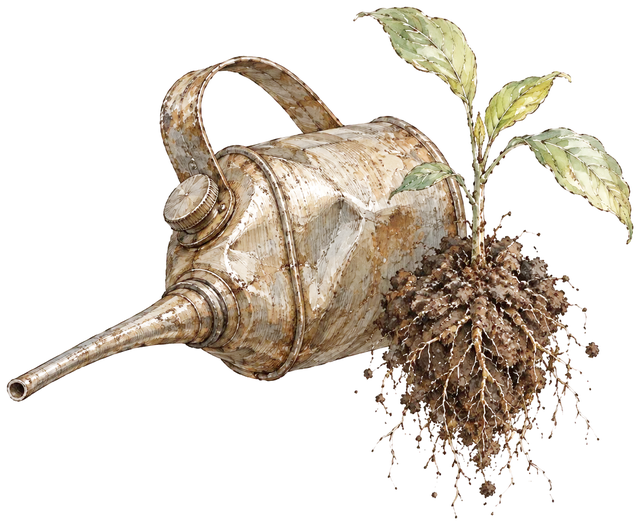
Data is soil.
Thirteen lessons for running workshops on Indigenous data sovereignty and AI that communities govern. They come from GainForest's work with Indigenous and local communities in the Amazon, the Philippines, Kenya, Uganda and Malaysia.
Written with the GainForest Indigenous and Local Data Council
13 lessons · about 8 hours · 13 handouts to print · 5 languages

The idea
Two ways to treat data
- Oil
- Taken out of a place, refined somewhere else and sold to whoever pays. The people it came from rarely see it again.
- Soil
- Looked after where it is, by the people who live with it. They decide what is collected, what gets corrected and what grows from it.
"Data is soil" assumes cultivation. It asks who tends the data, understands its seasons and meanings, can correct when it becomes harmful and decides what should be planted.
The course
Thirteen lessons in two parts
Each lesson has a short reading, an exercise to run with a group, and three questions to check yourself. Take them in order the first time.
- Part 1
Ideas
Why data is a question of power, and how a community keeps hold of it.
- 01
Oil or soil
Start with a model trained on your own faces
50 min
- 02
Who decides
Map every decision in a data project
30 min
- 03
Decide before you collect
Share it, keep it close, or leave it alone
35 min
- 04
House rules for AI
Write rules a community can read and change
35 min
- 05
The right to say no
Some knowledge should stay out of the model
35 min
- 06
The CARE principles
Four questions to ask before data moves
30 min
- 07
Local first
Small tools that keep working when the signal drops
35 min

- Part 2
Practice
Councils, assistants, recorders, drones and payments, as they work in the field.
- 08
Set up a data council
Three to five people who decide what goes public
35 min
- 09
Bumicerts
A record of your work that you keep
35 min
- 10
Taina
An AI assistant that communities shape
40 min
- 11
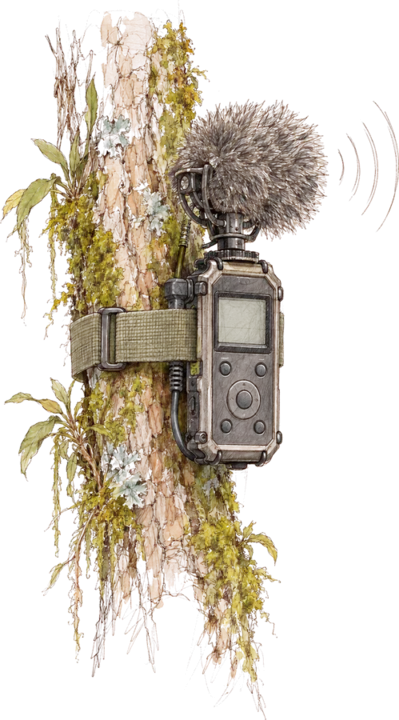
Listening with AudioMoth
Record the forest, then decide who gets to listen
45 min
- 12
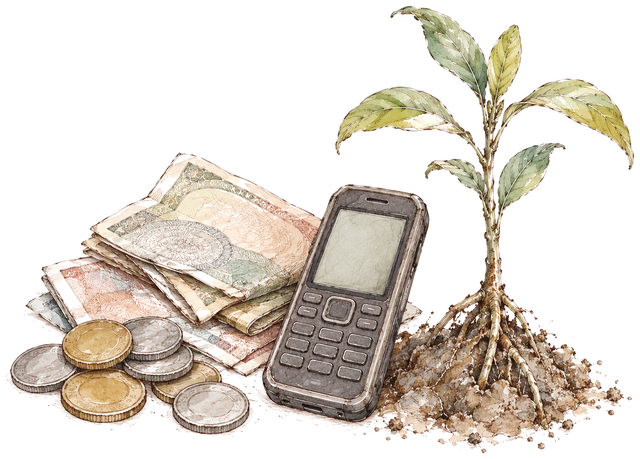
Paying for the work
Cash, crypto, and what actually reaches people
40 min
- 13
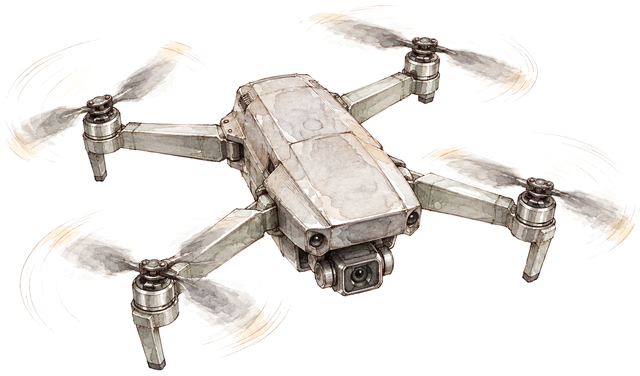
Mapping from above
Small flights, repeated, over land you know
45 min
- Read the workshop guideA day in the room, a day outside
How a workshop runs
A day in the room, a day outside
This is how we ran the course with communities near Manaus in 2026. The workshop guide has the full plan, shorter formats and the mistakes we made.
Read the workshop guide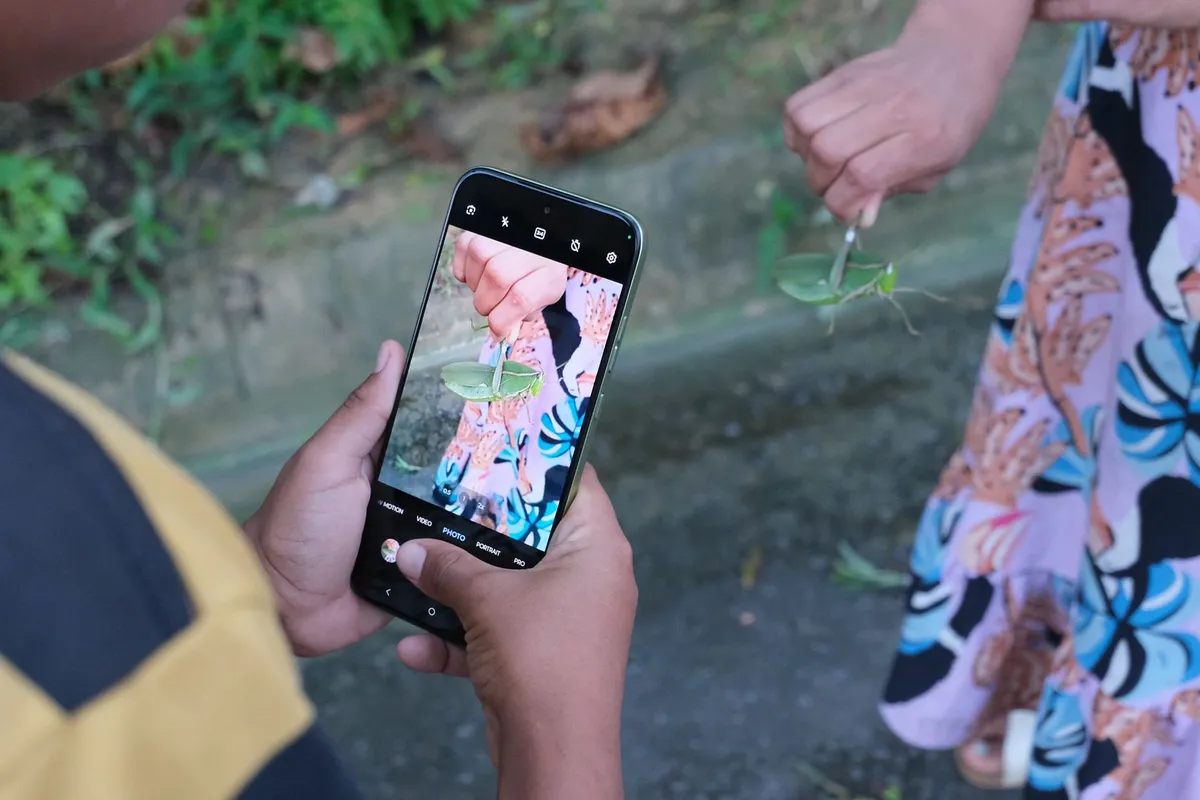
- 1
Train a model on yourselves
Everyone sees how AI learns from examples, and who gets left out.
- 2
Decide what stays close
Sort what to share, what to keep within the community and what to leave alone.
- 3
Go outside with the tools
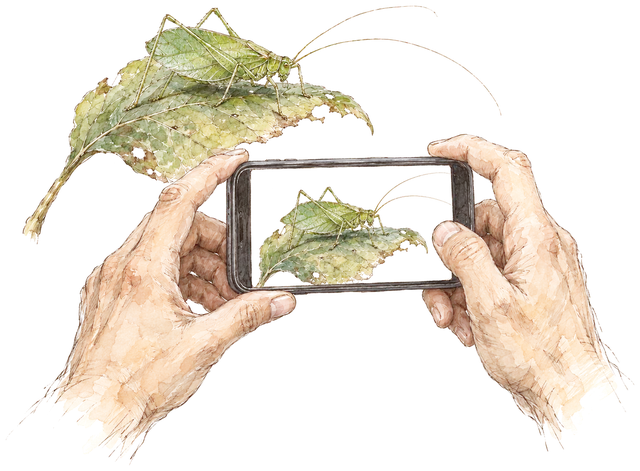
Photograph species with Taina, put out sound recorders, fly a drone.
- 4
Leave the kit behind
Local champions keep the tools, the data council decides, and you come back.
From the field
Where the lessons come from
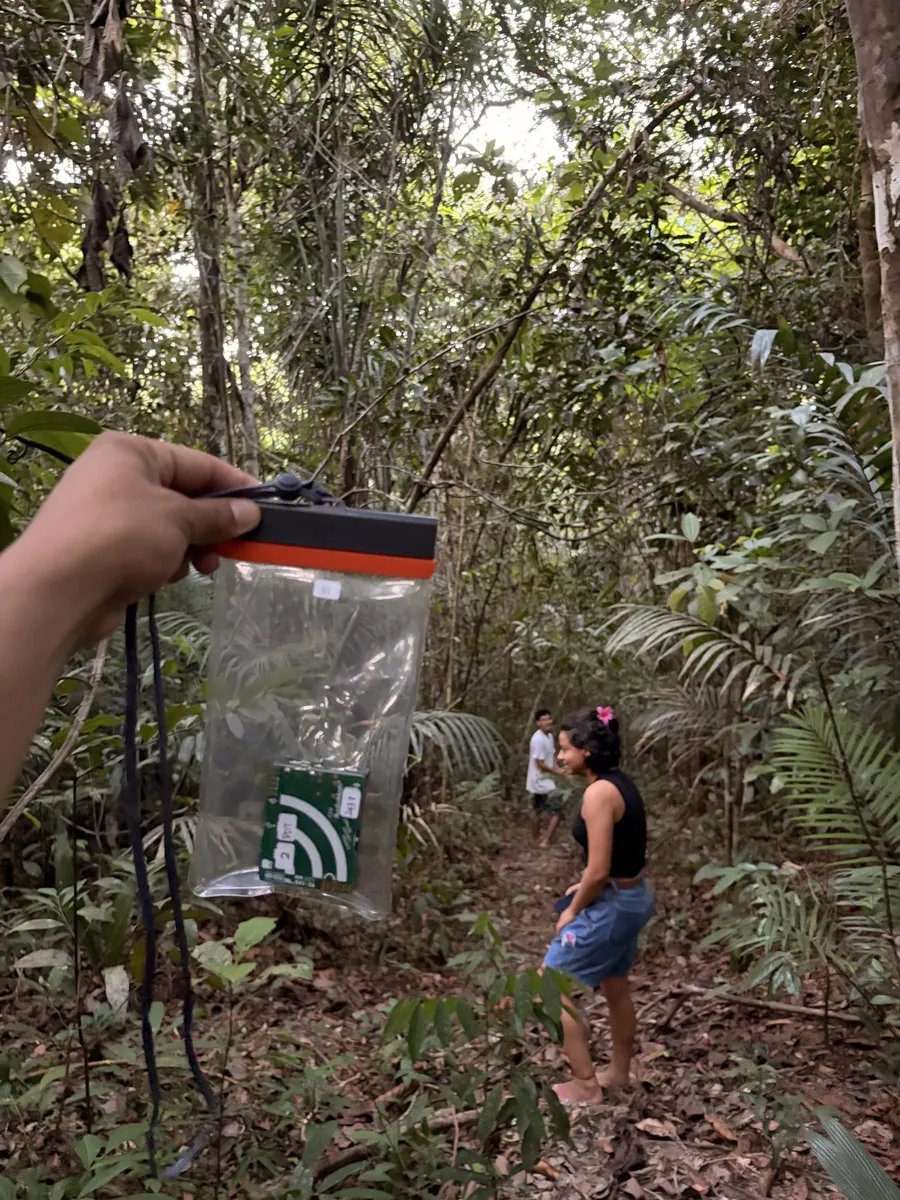
Manaus, Brazil, September 2026 Back in Manaus: field notes and forest sounds
Recorders that stayed in the forest, a bug that put photos in the wrong place, and why unpaid data work cannot last.
Read on the GainForest blog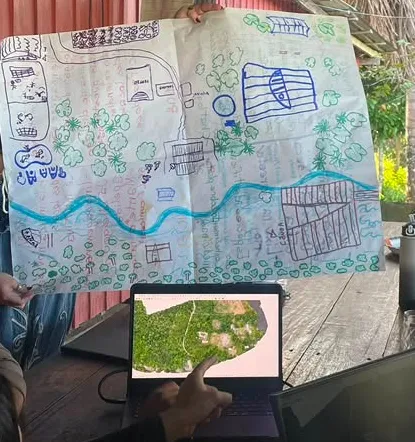
Arte & Escola na Floresta, near Manaus, June 2026 What a community taught an AI about itself
Children choose where to listen, parents ask what phones are for, and a group redesigns Taina's personality.
Read on the GainForest blog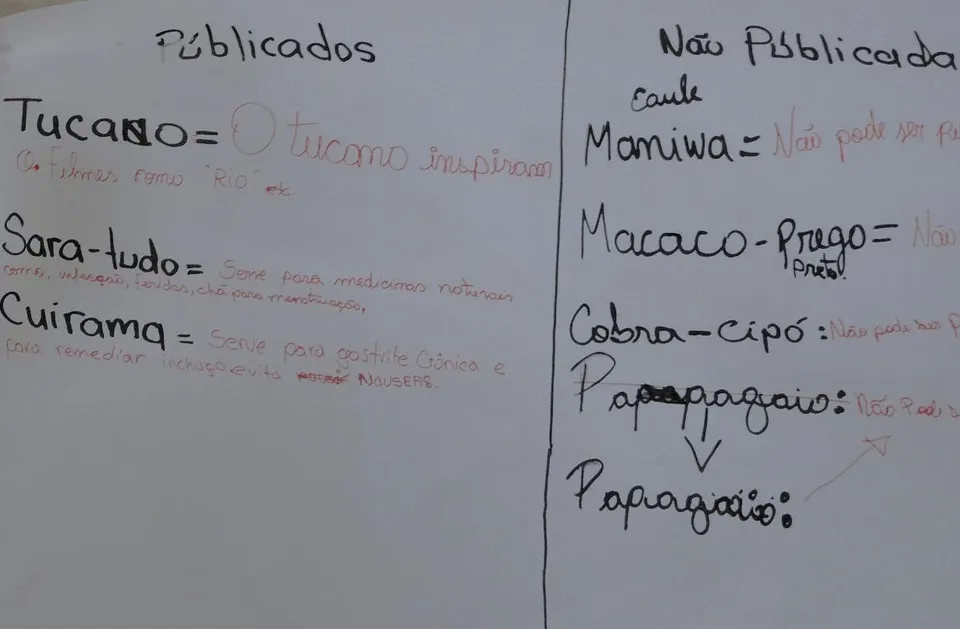
Parque das Tribos, Manaus, June 2026 What we learned by listening: deploying conservation AI in the Amazon
A workshop and BioBlitz with about thirty people, and a conversation about what stays public and what stays close.
Read on the GainForest blog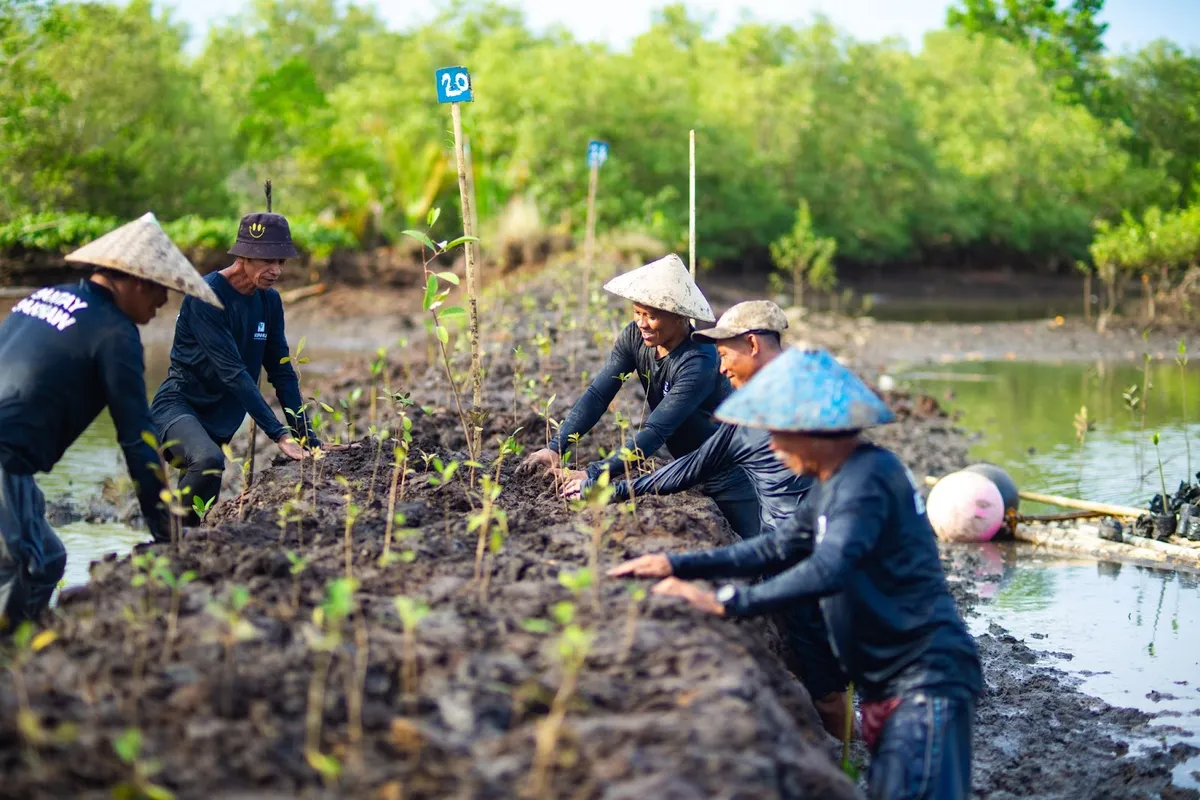
Surigao del Sur, Philippines, February 2025 Cash or crypto? Balancing fintech for conservation in the Philippines
Following a payment from a grant to a mangrove surveyor's hand, and why people still chose cash.
Read on the GainForest blog